
Mawlana Abdolhamid at Zahedan Friday Prayer:
“The activation of the snapback mechanism and intensification of sanctions will make people’s lives more difficult; officials must act with honesty and foresight to find solutions”
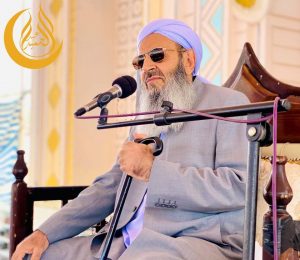
Shaikh-ul-Islam Mawlana Abdolhamid, in his Friday sermon on August 29th, 2025 in Zahedan, warned about the consequences of “the activation of the snapback mechanism and intensified sanctions.” He urged the country’s officials to act “with honesty and foresight” to prevent this from happening, so that the nation would not face “more serious crises.”
“All officials of the country—from the lowest ranks to the one at the very top—will be questioned on the Day of Judgment regarding their responsibilities”
According to the information office of the Sunni Friday Prayer Imam of Zahedan, Mawlana Abdolhamid began his sermon by citing the Qur’anic verse: “[On] the Day when Allah will gather the messengers and say, ‘What response were you given?’” He emphasized:
“All of us bear responsibilities and commitments, and whether we like it or not, we will be questioned by Allah Almighty regarding them. No one is exempt from this divine accountability—not even the prophets. On the Day of Judgment, Allah will question the prophets themselves. For example, He will ask Jesus (peace be upon him): Did you tell people to worship you and your mother?”
He added:
“No one can escape their responsibility. From an ordinary soldier to a commander, from the lowest-ranking official to the highest authority of the nation—who is regarded as the leader and head of the people—all are responsible, and Allah will question them about every aspect of their duties. This is not my statement, but the words of the Messenger of Allah (peace and blessings be upon him): ‘Each of you is a shepherd, and each of you is responsible for his flock. The imam (leader) is a shepherd and responsible for his people…’ In this authentic hadith, the very first person mentioned as responsible is the imam, the leader.”
He stressed:
“The Prophet (peace be upon him) described the one at the head of power, under whose orders everything is carried out, as responsible. Reason itself dictates that whoever accepts responsibility must be held accountable for it.”
“If even one person in the border regions cries out from hunger, thirst, lack of electricity, or oppression—all officials will be held accountable before Allah”
Mawlana Abdolhamid stated:
“The responsibility of society is very heavy. When Umar (may Allah be pleased with him) held the caliphate, he used to say: ‘If even a dog dies of hunger or thirst by the River Euphrates, on the Day of Judgment Allah will question Umar about it.’ His nightly visit to provide for an orphaned family is also well-known. Likewise, Ali (may Allah be pleased with him), upon hearing that a Jewish woman had been oppressed, said: ‘What use is life to me if in my domain a woman is wronged?’ Thus, if we fail to follow the example of the Prophet and his companions, our claims of love for them are meaningless.”
He emphasized:
“If even one person in the country’s border regions goes hungry, thirsty, without water or electricity, or is subjected to injustice, then all officials—from the lowest rank to the highest—are responsible for addressing that person’s needs. And the divine law is that if they fail to do so, they will be held accountable on the Day of Judgment.”
“The highest responsibility of every government in the world is solving the people’s problems”
Continuing his Friday sermon in Zahedan, Mawlana Abdolhamid referred to international developments, saying:
“We heard in the news that the snapback mechanism has been triggered, and if negotiations do not reach an outcome within a month, it will be enforced. This is extremely worrying. At a time when many people in our country lack water and electricity, and we have even heard that the government is planning to cut a meager subsidy that even a beggar might refuse, while at the same time facing a severe budget deficit—activating and implementing the snapback mechanism will make conditions much harsher.”
He further noted:
“We expect the authorities to think of fundamental solutions and truly care for the people. We are all responsible toward the nation. Everyone suffers from these problems, but the poor and low-income families are hit the hardest.”
He added:
“The foremost duty of any government in the world is toward its people. Many governments pursue their own policies, quarrel with one another, and use harsh rhetoric. But they must look behind and before them—at the people they represent. Our officials, too, must consider: if a new war breaks out or the snapback mechanism is implemented, what will become of our country’s situation? Officials must exercise foresight to address these challenges.”
“I oppose empty slogans; we must speak to the people and to the world with honesty”
The Friday Prayer Leader of Zahedan emphasized:
“I am against sloganeering—especially empty slogans—and I believe we must face realities and truths. The best policy is to speak honestly with our people and with the world. If the world is not honest with us, we should teach them that we are committed to honesty and sincerity. What matters most is to consider the interests of our nation and people, so that our country and our nation do not suffer further harm.”
He added:
“It is very important to see what people are going through. In places where electricity is cut off six hours every day, and temperatures rise above 50 degrees Celsius, what is happening to those people who can neither sit in their homes nor go outside? We hope that a solution will be found for this.”
“I recommend both sides to engage in honest dialogue and prevent sanctions and war”
Mawlana Abdolhamid advised:
“In the current sensitive circumstances, I urge both the Iranian side and the other side—Europeans and Americans—to hold honest dialogue, in order to prevent sanctions and the economic blockade of the country, and to avert war. With broad vision, dialogue, foresight, and consideration of people’s interests, issues can be resolved. War and sanctions benefit no one, and political matters must be solved wisely.”
“Allocating government budgets to religious and seminary centers is not right; the independence of madrasas and mosques must be preserved”
In another part of his sermon in Zahedan, Mawlana Abdolhamid stressed the independence of religious schools, saying:
“Sunni religious madrasas are funded by public donations, and we are pleased that we have not accepted government assistance in the path of religious education. We have always said that we will only admit as many students as we can support through public contributions and our own income. The independence of madrasas and mosques must be preserved, and they must be run by the people. Religious schools should not be dependent on any state or government.”
He added:
“Time and again, as part of our religious duty, we have told our brothers in both Shia and Sunni seminaries that you must rely on Allah and the people. Governments come and go, but we must remain well-wishers for all people, officials, and the country. The duty of scholars is to speak what they believe to be right, to enjoin good and forbid wrong, and this duty can never be lifted from their shoulders.”
The Friday Imam of Zahedan continued:
“Gradually, everyone will come to the conclusion that allocating state budgets to religious and seminary centers is not right. Now that the country is facing crises, officials are trying to cut these funds. But how can you easily take milk away from a child who has become accustomed to it?”
“The province’s security must be preserved; this is everyone’s need.”
Referring to recent incidents in Sistan-Baluchestan, the Friday Prayer Leader of Zahedan emphasized the importance of security:
“Recently, certain insecurities have occurred in the province, and even in the roads there have been security problems. We have always emphasized—and we believe—that security must be maintained. Security of the roads, cities, villages, and the entire province must be ensured, and everyone must help to establish it. Roads must not be blocked, and cities and villages must not be made insecure. It is the responsibility of community elders, tribal leaders, and scholars to think about security, because maintaining security is vital, important, and a need for all. All commercial activities, education, business, religion, and worldly affairs are conducted under the shade of security.”
“We do not distinguish between ethnic groups and sects in the province; human and civil rights must be respected for all”
Mawlana Abdolhamid, stressing equal rights for all citizens, said:
“We do not differentiate between Baloch, Sistani, Birjandi, Shia, or Sunni citizens of this province. We even believe that non-Muslims living here should not be harmed. Everyone, regardless of religion or sect, must enjoy their human rights. No one’s life, property, or honor should be violated. No one’s rights in society should be disregarded. When it comes to the rights of non-Muslims, I am even more sensitive, because I know, unfortunately, some are careless about their rights—while they too are human beings and have citizenship rights. Their blood and wealth are not permissible for anyone to take.”
He stressed:
“All those who live in this province—from Baloch and Sistani to Birjandi, Kermani, and others—share historical kinship and unbreakable bonds. They have lived together for centuries and have many things in common. One of the wrong and unpleasant policies of the past has been discrimination among people. Discrimination is un-Islamic, irreligious, and unjust.”
“In recruitment, place all ethnic groups side by side, so that if something happens at the borders or on the roads, it happens to all equally”
The Friday Prayer Leader of Zahedan added:
“In the past, some segments of society have been deprived of employment opportunities, while individuals from a single ethnicity or group have been recruited. I have repeatedly told both national and provincial authorities that they should not discriminate between ethnicities, but rather place all groups side by side, so that if an incident occurs at the borders or on the roads, it happens to all equally. This way, the suspicion does not arise that there is enmity with certain ethnic groups.”
Referring to the atmosphere in social media and the existence of discrimination, he said:
“Unfortunately, unfair statements are seen on social media, and some create the perception that only one ethnic group sacrifices its lives in defense of the roads and borders. Whereas if other groups were also recruited without discrimination, then all ethnicities would share in defending the borders and roads, and if anyone were killed, they would fall side by side. For us, there is no difference between the children of the nation. We are grieved whenever anyone’s blood is shed in this province, and it is hard for us. Those who raise this issue should ask the country’s top officials why they discriminate among the nation.”
“Unfortunately, the policy of discrimination continues strongly in the country / In many counties of Khorasan, where Sunnis form the majority, the Pezeshkian government has still not appointed a Sunni governor”
The Friday Imam of Zahedan continued:
“In many counties across the three Khorasan provinces and other regions, where the majority of the population are Sunnis, the government of Mr. Pezeshkian—despite its slogans of non-discrimination—has not yet appointed a single Sunni governor. Sunnis, too, have educated and university-trained individuals. The question is: how many Sunni academics have you appointed as university presidents? Unfortunately, the policy of discrimination continues strongly in the country. It is surprising that in the Islamic Republic, instead of equality, fairness, and meritocracy, discrimination prevails.”
He stressed:
“We say that both Shia and Sunni capable individuals must be appointed to positions, not weak people dependent on certain institutions. Responsibilities must be entrusted to the qualified. Even among the Shia there must be no discrimination—both competent Shia and Sunni professionals must be entrusted with duties. This would give the government a good reputation and satisfy the nation. We hope these problems will be resolved. For the security of the borders and roads—which is very important—martyrs must be from both sects, standing side by side, and this would be in the country’s best interest.”
“Insecurity, kidnappings, and extortion have increased; everyone must fulfill their responsibility / The dignity of elders, scholars, and women must be preserved”
In the concluding part of his Friday sermon in Zahedan, Mawlana Abdolhamid pointed to the rise of social insecurity and said:
“Unfortunately, insecurity, kidnappings, and extortion have greatly increased and are growing day by day. My advice is that everyone must fulfill their responsibilities—no one should remain indifferent. Tribal elders and community leaders, scholars, academics, and intellectuals must work on this issue and on maintaining security, so that we no longer witness killings and kidnappings.”
Emphasizing the respect for elders and religious traditions, he said:
“If a conflict or dispute occurs, my advice is that elders and community leaders should not be disrespected. This has been the tradition of the region: if two groups were in conflict, they still respected elders, scholars, and women. Unfortunately, recently some elders have been killed or taken hostage in tribal disputes. This is against the tradition and against the hadith of the Messenger of Allah (peace and blessings be upon him), who said: ‘Honor your elders, and place each person in the position they deserve.’ It is narrated that the Prophet honored a man, saying: ‘This man holds a position of dignity among his people.’ People must always respect women, elders, scholars, and educated individuals.”