
Shaikh-ul-Islam Mawlana Abdolhamid:
No One Should Desire War / Preventing War Is In The Hands Of Officials
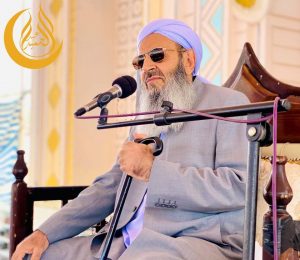
Shaikh-ul-Islam Mawlana Abdolhamid, speaking today (February 20th, 2026) at the Friday prayer ceremony in Zahedan, referred to the “heavy consequences of war for nations” and stated that “no one should wish for war or confrontation with an enemy.” He said that preventing the outbreak of war lies in the hands of officials, who must act with prudence to avert it.
According to the official website of the Office of the Sunni Friday Imam of Zahedan, Mawlana Abdolhamid said in part of his sermon that discussions of war are currently being heard in the country. No one should long for war or confrontation with an enemy, because war brings devastation and severe consequences for nations; it results in loss of life and property and damages infrastructure.
He emphasized that preventing war is the responsibility of officials, who must take wise measures to avoid it.
Political Prisoners And Detainees Of The Dey Protests Should Be Released
The Friday Imam of Zahedan further called for the release of political prisoners and those detained during the recent protests. He stated that under the current circumstances, it would be appropriate for all political prisoners, as well as those arrested during the Dey protests, to be released unconditionally.
He added that, in these conditions, certain measures should be taken that may prove effective.
No Nation Tolerates Insults To Its Sacred Beliefs
Wise And Cultured People Never Insult The Sacred Beliefs Of Others
In another part of his sermon, reacting to reports about plans to insult the Holy Qur’an, Mawlana Abdolhamid stated that some individuals who suffer from personal grievances resort to profanity and sometimes insult the sacred beliefs of religions and sects—while such behavior contradicts reason and logic.
He said that wise, cultured, and civilized people never insult others or their sacred beliefs. Those who insult the sanctities of nations are emotional and lacking sound judgment.
He added that insulting the sacred beliefs of a nation is no different from insulting the nation itself. A nation may tolerate insults directed at itself, but it will never tolerate insults to its sacred beliefs. Such actions deeply wound public sentiments. Insulting sacred beliefs is not permissible in any religion. Therefore, he recommended that authorities prevent individuals from committing such offenses. If someone has committed wrongdoing somewhere, why should sacred beliefs be insulted?
Make Marriage Easier
In another part of his address, the Friday Imam of Zahedan emphasized the necessity of facilitating marriage. Addressing the public, he said that under the current economic conditions—where gold prices have risen sharply and everything has become expensive—people are unable to afford gold purchases or the cost of renting wedding halls and hosting large gatherings. Therefore, marriages should not be delayed because of these financial burdens.
He also stressed the need to reduce dowries, noting that while in the past dowries were often set in large numbers of gold coins, today the price of coins is high, and excessive dowries should be avoided. Marriages should be made easier so that young men and women can start their lives with minimal expenses and preserve their faith and religious commitment.
Support Darul-Uloom Zahedan
At the conclusion of his sermon, Mawlana Abdolhamid called upon the public to support Darul-Uloom Zahedan. He stated that Darul-Uloom Zahedan is one of the largest educational centers in the country and, through the blessings of the prayers of the late Allama Mawlana Abdulaziz (may Allah have mercy on him), along with the cooperation and prayers of the people, it has witnessed progress and development. The institution provides education in separate sections for men and women.
He urged the public, especially under the current sensitive economic conditions, to assist Darul-Uloom Zahedan, to support the poor and needy, as well as other schools, and to allocate a significant portion of their zakat and charitable donations to Darul-Uloom Seminary of Zahedan.
Fasting Strengthens The Spiritual Dimension Of The Human Being
Shaikh-ul-Islam Mawlana Abdolhamid, in the first part of his sermon at the Friday prayer in Zahedan (February 20th, 2026), stated that the human being consists of two dimensions: a “bestial (animal)” dimension and a “angelic (spiritual)” dimension. He spoke about the role and impact of observing divine commandments and obligations—particularly fasting—in strengthening the spiritual dimension of a person.
Allah Has Provided For All Material And Spiritual Needs Of Humanity
According to the official website of the Friday Prayer Office of Ahl-al-Sunnah in Zahedan, Shaikh-ul-Islam Mawlana Abdolhamid recited the verse:
“O you who believe! Fasting has been prescribed for you as it was prescribed for those before you, so that you may attain piety.” (Qur’an 2:183)
He stated that Allah the Exalted created the human being as a unique creature composed of both material and spiritual dimensions. Humans resemble animals in some respects and angels in others; they are connected both to the worldly realm and to the unseen, spiritual realm (malakūt). Therefore, human needs differ from those of animals, which are concerned only with material necessities.
Animals strive merely for food, drink, rest, and physical needs. Human beings, however, while possessing material and bodily needs, also have profound spiritual needs.
He continued by explaining that just as Allah has provided for all material needs of humanity—granting housing, blessings, marriage, children, and worldly provisions—He has also prescribed acts through which a person’s spiritual needs are fulfilled and the spiritual, angelic dimension is strengthened.
Prayer, Zakat, Fasting, And All Acts Of Worship Fulfill Spiritual Needs
The Friday Imam of Zahedan referred to acts that nurture the spiritual dimension and said that one of the essential spiritual needs of a human being is prayer. Prayer is intimate communion with God; a person needs to stand before Him in humility and supplication.
He added that paying zakat, giving charity, and helping the poor are also spiritual necessities, enabling a person to worship Allah with both wealth and self. Charity purifies a person from moral vices.
He emphasized that prayer, fasting, zakat, Hajj, and all acts of worship are extraordinarily effective in shaping both the individual and society. They bring material and spiritual benefits. A society will never reach maturity, strength, or excellence unless these acts are practiced. Through them, a person attains salvation in this world and the Hereafter, achieving peace and prosperity.
Fasting Is A Unique Act Of Worship In Cultivating Piety And Transforming Life
Mawlana Abdolhamid described fasting as especially vital in strengthening the spiritual dimension. He stated that fasting is a unique act of purification and moral training; it transforms a person’s life and leads to taqwa (piety), which is the greatest need of humanity. Fasting cultivates self-restraint and God-consciousness.
He further explained that Allah loves the pious and is near to them. The closest person to Allah is not someone merely descended from the Prophet or belonging to a noble lineage, but the one who is most pious. The Messenger of Allah (peace and blessings be upon him) is the leader and model of the pious. Thus, fasting is of vital importance because it brings transformation and fosters piety.
The Qur’an Is The Word Of God, A Miracle, And Humanity’s Greatest Treasure
In the concluding part of his remarks, the Friday Imam of Zahedan spoke about the connection between Ramadan and the Qur’an. He stated that Ramadan is the month in which the Qur’an was revealed. The Qur’an is the Word of God, a miracle, and the greatest treasure of humanity.
He explained that previous scriptures were also the Word of God but were not preserved as miracles in the same manner, and they were altered by people for their own interests. The Qur’an, however, is both the Word of God and a living miracle; no one can alter or distort it. Thousands of boys and girls have memorized it—this is one of its unique characteristics. No other book in the world possesses the vast content and depth of the Qur’an.
He added that the proof of the Qur’an’s truth is that if all of humanity and jinn were to gather together, they would not be able to produce even a single chapter like those of the Qur’an. The Qur’an itself and its miraculous nature are evidence of its authenticity.
Ramadan Is A Month Of Goodness And Blessing; Pay Your Zakat And Care For The Needy
Mawlana Abdolhamid stated that Ramadan is a month of goodness and blessing. During this month, give charity and pay the zakat on your wealth. Calculate the sale value of the goods in your shops and pay their zakat; do not allow your wealth to become impure. When zakat is not paid, wealth is placed at risk of destruction.
He added that Islamic teachings emphasize assisting the poor and the needy throughout the year, and especially during the blessed month of Ramadan.
Increase Supplication And Worship In Ramadan And Avoid Sin
Concluding this part of his sermon, Mawlana Abdolhamid stressed the importance of abundant worship and supplication, as well as refraining from sins during Ramadan. He urged people to engage frequently in duʿāʾ (supplication), seeking forgiveness, remembrance of God (dhikr), and acts of worship. The more remembrance an act of worship contains, the greater its reward.
He encouraged people to recite the Qur’an and attend Qur’anic classes, noting its profound spiritual impact. He also recommended participating in the Tarawih prayers, during which the Qur’an is completed. Fast during the day and listen to the Qur’an at night, for this carries great reward.
He further cited a narration from the Messenger of Allah (peace and blessings be upon him), stating that three acts lead to the forgiveness of all sins: fasting Ramadan with faith and the intention of earning reward; performing the night prayers and Tarawih; and standing in worship on Laylat al-Qadr. Whoever does these with sincere belief will have all previous sins forgiven.
Mawlana Abdolhamid emphasized that these are days of supplication, humility, and earnest pleading before God—so increase in prayer. He also advised avoiding sins, especially backbiting and lying. It is mentioned in a hadith that if a person fasts but does not refrain from sin, Allah has no need of that person’s fasting.