
Mawlana Abdolhamid In A Meeting With Scholars And Friday/ Congregational Imams Of Zahedan County:
Ramadan Is “A Month Of Self-Development, Human-Building, And Life Transformation” / Scholars Should Have Programs In Mosques For Different Segments Of Society
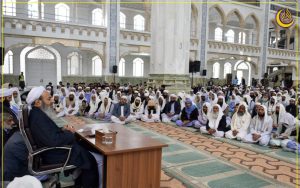
Shaikh-ul-Islam Mawlana Abdolhamid, on Monday (February 16th, 2026), during a consultative meeting and gathering with scholars, Friday and congregational imams, and Qur’an memorizers of Zahedan County, emphasized the necessity of holding reformative and educational programs in mosques during the blessed month of Ramadan by religious scholars.
According to the information website of the Office of the Sunni Friday Imam of Zahedan, Mawlana Abdolhamid, in this meeting—held on the eve of the arrival of the blessed month of Ramadan at the Makki Grand Mosque of Zahedan—referred to Ramadan as “a month of human-building and transformation in life” and said:
Ramadan is a month of self-development, human-building, and transformation in life. Let us bring change into our own lives and into the lives of the people. Let us practically welcome Ramadan and build ourselves in this month. Inner reform—of the heart and character—and strengthening faith are extremely important. Go to the people and strengthen religion and faith in their lives. Ramadan is certainly an exceptional opportunity.
He added: Unfortunately, after Ramadan, the mosque becomes empty of worshippers and people’s presence fades. Therefore, we should plan in Ramadan for all segments of society: for youth, women, and the general public. Sermons should be delivered based on need and necessity, with preparation and prior reflection.
In Tarawih Prayers, The Qur’an Should Be Recited Slowly And With Tartil, And The Proper Postures Of Prayer Must Be Observed
The head of Darul Uloom Zahedan then pointed to the impact of listening to the Holy Qur’an during Tarawih prayers and stated:
In mosques, the completion of the Qur’an should be held in Tarawih prayers. The more people remain in prayer and listen to the entire Qur’an, the more effective it will be, and their faith and guidance will increase. Encourage people to be patient, to stay in the mosque, and to benefit from Ramadan. Many say they become tired in Tarawih and their legs hurt; they should be told: for worldly matters our head, legs, and heart suffer pain—so what is wrong if our legs hurt for the sake of God?
The Friday Imam of Zahedan further emphasized: Planning should also be made for Qur’an education; teaching the Qur’an carries abundant blessings. When the Prophet (peace and blessings be upon him) recited the Qur’an with Jibril, the Qur’an had a profound impact on him—both due to the effect of the Qur’an itself and due to the presence of Jibril. Therefore, help in learning and teaching the Qur’an and hadith.
He continued: The Qur’an in Tarawih prayers should be recited in such a way that the letters are pronounced correctly and properly. The recitation should be with tartil and slowly, and in Tarawih prayers, the proper pauses and postures must be observed. In ruku‘ (bowing), sujud (prostration), and qawmah (standing after ruku‘), one should pause at least long enough to say three tasbih. Efforts should also be made so that the completion of the Qur’an in Tarawih takes place in the last ten days of Ramadan.
Religious Activities Should Increase In Ramadan; Encourage People To “Establish Prayer,” “Pay Zakat,” And “Recite The Qur’an”
Mawlana Abdolhamid emphasized the need to increase religious activities during the blessed month of Ramadan and said:
Unfortunately, under today’s conditions, irreligiosity and people’s distancing from religion have greatly increased. In Ramadan, ears, eyes, and minds are more open, and people listen to words more attentively. Efforts should be made to give greater attention to religious activities.
He concluded: People are negligent in paying zakat; encourage them to pay zakat. Encourage people to establish prayer, to recite the Qur’an at home and in the mosque, and also to observe i‘tikaf (spiritual retreat in the mosque). These matters are extremely important, and in Ramadan religion must be revived in our society.