
Mawlana Abdolhamid:
“Sectarian and Partisan Mindsets” Among Officials Have Led to “Internal Discord” and “Public Dissatisfaction” / Religious and Partisan Views Constrain and Diminish the Nation
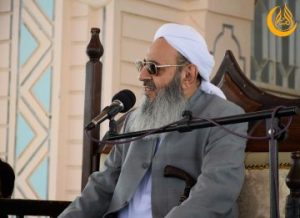
Shaikh-ul-Islam Mawlana Abdolhamid, in his Friday sermon today (July 18th, 2025) in Zahedan, identified sectarian and partisan ideologies among government officials as the main cause of internal divisions and public dissatisfaction. He stressed the need for a national, Islamic, and human-centered mindset in governance.
The Palestinians and People of Gaza Are Being Massacred in a Tragic Situation
Places of Worship—regardless of religion or denomination—Are Sacred
According to the official website of the Zahedan Friday Prayer Office, Mawlana Abdolhamid began his remarks by saying:
“The current global events are deeply disturbing. Palestinians, especially the people of Gaza, are being massacred in a highly tragic situation, and the city of Gaza has been reduced to ruins. In food distribution queues, people who have lost everything and are waiting in line in hope of humanitarian aid are being shot at or bombed.”
He added:
“Just a few days ago, a church in Gaza was targeted, resulting in the death of several individuals. Whether a place of worship belongs to Muslims, Christians, Jews, or any other faith or nation, it is sacred. From Islamic, humanitarian, and international legal perspectives, such sanctities must be respected.”
The Israeli Army is Targeting Unarmed Civilians in Gaza / The UN and Human Rights Bodies Have Failed to Uphold Palestinian Rights
The Friday prayer leader of Zahedan stated:
“Today, a fully equipped military force has unleashed violence upon an entire nation. This army is not fighting a government; it is attacking a people. Even if there is an armed resistance group confronting the army, they are few in number and engaged in guerrilla warfare. In this context, why should women, children, the elderly, and civilians be killed? This action contradicts religious, humanitarian, international, and universally accepted norms.”
He emphasized:
“The United Nations and human rights organizations have failed in defending the rights of the Palestinian people and the defenseless in Gaza. Every human being, Muslim or non-Muslim, has rights that must be respected.”
Hamas, Fatah, and Other Palestinian Factions Must Unite and Consider the Future of Palestine and Gaza
Mawlana Abdolhamid then addressed Palestinian groups directly:
“The Hamas and Fatah movements, along with other Palestinian groups, must sit together and think about the future of the Palestinian people—especially the women and children being killed. Even if these groups are part of the armed resistance, they must consider the plight of Palestinian women, children, and civilians who are defenseless and cannot be protected by them. These factions must revise their strategies so that the people do not continue to perish. The international community must also consider the suffering of the Palestinian people.”
He continued:
“Hamas and other active groups in Palestine must not think only of martyrdom. Islam is not only a religion of jihad and martyrdom, but also a religion of wisdom, thought, and strategic foresight. For people who lack water and food and are chasing aid trucks with empty containers in hand, there must be serious consideration and planning.”
The Imam of Zahedan emphasized:
“My sincere advice to the brothers in the Hamas movement is to prioritize the well-being and interests of the Palestinian people. They should not insist on a single policy or path. Rather, with foresight and long-term vision, they must reconsider past strategies and focus on the future of the people of Palestine and Gaza. Choosing the right and just path that leads to peace and security for Palestinians is itself a form of jihad.”
He concluded:
“Islamic countries and the global community must not remain indifferent to the issues of Palestine and Gaza. Instead, they should work toward achieving a permanent ceasefire and a just resolution that prevents further displacement of Palestinians and ensures the security of both sides.”
Israel’s Attacks on Syria Are “Provocative”; The International Community MUST Restrain Israel
Mawlana Abdolhamid also referred to recent events in Syria, stating:
“There has been an ethnic, tribal, or sectarian conflict taking place in Syria, and the Syrian government has intervened in this matter. On the other side, Israel has targeted Syria’s presidential palace and Ministry of Defense.”
He remarked:
“It is truly astonishing that a country, which holds membership in many international bodies, dares to so blatantly launch military attacks on a neighboring state! Shouldn’t international laws, borders, and airspace be respected by every government? The same applies to the recent military aggression against our own country, Iran, which is known to all. These actions are clearly provocative.”
The Friday Imam of Zahedan added:
“Syria has had no ongoing conflict or war with Israel. Israel has annexed parts of Syrian territory, including the Golan Heights, and in recent months, it has destroyed many of Syria’s military facilities and assets—national resources that belonged to the country. Supporters of Israel, including the United States and European countries, must restrain Israel and not allow it to provoke other nations or the free people of the world.”
International Laws Must Be Respected During Warfare
Extremism in any religion or nation is “ugly and reprehensible”; all must follow “moderation, reason, and logic”
Mawlana Abdolhamid emphasized:
“In times of war, international laws must be respected. No Islamic country or militant group has the right to violate Islamic or international laws in their battles—this is contrary to reason and logic. You should not incite an entire nation against Jews, because Jews are also one of the world’s peoples with a long history.”
He clarified:
“Muslims should not tarnish the legacy of Islam and their own historical record. They must act with reason and wisdom. The actions carried out by Israel harm the Jewish people themselves and will darken their historical record. Extremism, wherever it occurs—among the followers of any faith or nation—is ugly and unacceptable. Everyone must adhere to moderation, reason, and logic.”
Israel’s Recent Military Strike on Iran Damaged “National Assets”
In another part of his sermon, Mawlana Abdolhamid addressed Iran’s internal affairs, stating:
“Our country has recently faced serious problems. Enemies violated our territory and struck national assets. The military commanders and nuclear scientists who were killed were sons of this very nation—they were national assets. The nuclear sites that were attacked and heavily damaged were built at enormous cost. Many assets abroad that had been invested in were also harmed. These are all national resources—not personal property—and must be treated as such.”
He added:
“In the recent attack, the enemy precisely targeted sensitive locations. There are suspicions concerning ‘infiltration agents’ in this case. It’s vital to investigate how and from where such agents managed to penetrate. Were they enticed with money or bribery? Or did they take advantage of the internal divisions that have plagued the country in recent years? Therefore, in such a situation, the voices and concerns of those inside and outside the country—even those in prison—must be heard.”
The Enemy Made a “Miscalculation” in Attacking Iran / Despite “Deep Internal Divisions,” the Iranian Nation Will NEVER Side With Foreign Aggressors
Mawlana Abdolhamid further stated:
“From my analysis, it was internal disunity that led to infiltration. The events of 2019 and 2022 created divisions within the country. Though some may not have spoken openly, many people were hurt and dissatisfied in their hearts. Many lost loved ones in these incidents, which created widespread public resentment.”
He continued:
“When enemies observed these internal rifts, they felt emboldened to launch an attack. But they made a miscalculation. They assumed that the opposition groups inside Iran would support them, but they were wrong—this proved they still don’t understand the Iranian nation.”
He emphasized:
“Although there are deep internal disagreements among Iranians, this nation will never side with foreign aggressors in times of war. They believe internal disputes should be resolved among themselves. Even if Iranians fight one another, it is still they who will bury each other’s dead.”
Religious Thought Limits Governance and the Nation, and Is Ineffective in Any Country
The Imam of Zahedan addressed the origins of Iran’s internal divisions, stating:
“The root of the country’s divisions emerged when, following the Revolution, many influential officials and decision-makers became entrenched in religious thought. However, religious ideology tends to generate problems; instead, the prevailing mindset should be national or, at minimum, Islamic rather than narrowly sectarian.”
He further elaborated:
“Religious thought within governance—whether from Shi’a or Sunni perspectives—poses significant challenges. While Islamic thought possesses great breadth and capacity, religious thinking rooted in fatwas is inherently restrictive. Such religious ideology confines governments, nations, and scholars alike. This approach has proven ineffective neither in Iran nor elsewhere. Several nations that once adopted religiously-driven policies have since revised their approaches.”
Numerous Reformists, Considered National Assets, Have Been Marginalized
Mawlana Abdolhamid continued:
“Over time, intellectual and ideological diversity narrowed, giving way to partisan perspectives. Initially, religious thought sought to exclude other faiths, and subsequently, partisan thinking attempted to eliminate opposing factions.”
He added:
“Within political competition, the hardline faction ultimately prevailed, assuming power and sidelining reformists. Many reformists either declared the system beyond reform and adopted alternative ideologies, or were relegated to political dormancy. Presently, a considerable number of reformists—individuals nurtured as national assets—remain politically marginalized.”
The Public Perceives the Government and Parliament as Lacking Necessary Authority
He observed:
“The populace elects the government and parliament but perceives these bodies as lacking the requisite powers. Despite participating in presidential and parliamentary elections, citizens observe that these institutions do not wield the authority they ought to possess.”
He recounted:
“In a meeting with a former president now politically inactive, a request to appoint a Sunni minister was met with the candid admission that such authority was beyond his jurisdiction. Likewise, when the matter of establishing a Sunni mosque in Tehran was raised with another president, he stated that the decision was not within his purview. It is indeed perplexing that an elected president would lack such fundamental powers.”
Narrow Thinking Diminishes the Nation; Had We Embraced National, Islamic, and Humanitarian Perspectives, We Would Command the Entire Nation
The Imam of Zahedan asserted:
“The contraction of intellectual horizons has consequently constrained the nation. When thinking is limited, the nation itself becomes diminished. Iran, endowed with diverse, resilient ethnic groups, a rich historical legacy, and a venerable culture, stands as an exceptional country in the Middle East and the broader region. Its vast resources—including seas, minerals, agriculture, livestock, and, paramountly, oil and gas—are assets unmatched by many other nations. Iran controls a substantial share of the world’s oil and gas reserves.”
He further emphasized:
“Regardless of political affiliation—reformist or conservative—or ethnic, sectarian, and religious distinctions, all inhabitants of Iran are Iranians. Had we valued this diversity and embraced national, Islamic, and humanitarian thinking, we would today enjoy the unity of the entire nation.”
Financial Corruption Has Inflicted Severe Damage on National Interests
Mawlana Abdolhamid remarked:
“Another critical issue that has severely undermined the nation and its interests is financial corruption. Numerous other concerns have been repeatedly addressed and cautioned against. Out of sincere concern, we have urged cessation of executions that alienate the Iranian people. We have also demanded that any misconduct in detention facilities be promptly halted, as such actions contravene Islamic law. It remains our solemn duty to defend both the sacred law and national interests—not merely religious or sectarian ones—even at the cost of one’s life.”
The People’s Livelihoods Have Been Devastated, and Resources Are Depleted
The Imam of Zahedan continued:
“Currently, the country stands at a crossroads where the lives of its people are shattered and their means depleted. Simultaneously, government agencies grapple with severe financial constraints, and numerous development projects remain suspended.”
He concluded:
“In such circumstances, urgent, comprehensive, and fundamental solutions are imperative. Attention to trivial details alone will not resolve these challenges.”
I Do Not Intend to Incite; Rather, I Seek to Have These Issues Heard / Regrettably, No Receptive Audience Has Been Present
Mawlana Abdolhamid further stated:
“By articulating these concerns, my intention is not to provoke or incite anyone, but to ensure that these issues are duly heard. Some have advised against raising such matters from the pulpit; yet, where and with whom should I present these concerns to garner attention and remedial action? Regrettably, throughout this period, there has been a paucity of attentive and receptive listeners. Many have dismissed these remarks as biased, disregarding the voices of critics and well-meaning individuals. Consequently, adversaries have exploited this very gap.”
He emphasized:
“These statements are not provocative but rather constitute a pathway to remedy, articulated with sincere intent for the betterment of the nation and its people.”
Thought Must Become National in Character
Release Political Prisoners and Hear Their Voices
Mawlana Abdolhamid declared:
“As a sincere well-wisher of the nation and its citizens, I have repeatedly cautioned that absent reforms in domestic and foreign policies, the country will confront grave challenges and impasses. It is imperative that thought be national; all undue influences must be withdrawn from national interests, and national assets must be restored to the people. Political detainees are neither adversaries of the nation nor threats to its interests; rather, they are critics whose grievances warrant attention. Therefore, they should be released and their concerns addressed. Certain factions advocating constitutional reform have arrived at this conclusion precisely because they perceive no alternative path forward.”
He added:
“Resolving the country’s difficulties demands elevated resolve and a transformation in mindset and outlook. The leadership and officials of the system must adopt a national perspective and undertake earnest efforts to devise sustainable solutions. Were we to embrace a humanitarian and Islamic ethos, no Iranian citizen would find cause for grievance, nor would such issues arise.”
Afghan Migrants Should Be Granted Adequate Time / The United Nations and Global Charitable Organizations Must Assist
Concluding his remarks, the Imam of Zahedan addressed the challenges relating to the repatriation of Afghan nationals and the plight of undocumented individuals, stating:
“My appeal to the authorities is to provide Afghan migrants with reasonable timelines and to implement their repatriation in a gradual manner, thereby affording them the opportunity to liquidate assets and enabling the Afghan government to accommodate their returnees. Furthermore, authorities must ensure that migrants are not subjected to excessive fees, as there are reports of disproportionate charges being imposed.”
He further urged:
“I call upon the United Nations, international charitable organizations, and civil society institutions to extend their support to our Afghan brethren and to bring them under protective care.”
Provincial Authorities Must Address the Issue of Undocumented Iranian Citizens
Regarding the matter of Iranian citizens lacking official identification, Mawlana Abdolhamid remarked:
“I urge provincial administrations to attend to the plight of those deprived of identification documents. A significant number of individuals have been unable to obtain official papers due to entrenched religious and ethnic prejudices within relevant administrative bodies. Regrettably, the most stringent personnel have been entrusted with civil registration duties, instituting severe barriers that have even prevented bona fide Iranians from obtaining documentation. It is therefore essential to undertake fundamental reforms to ensure these individuals receive their rightful identification.”